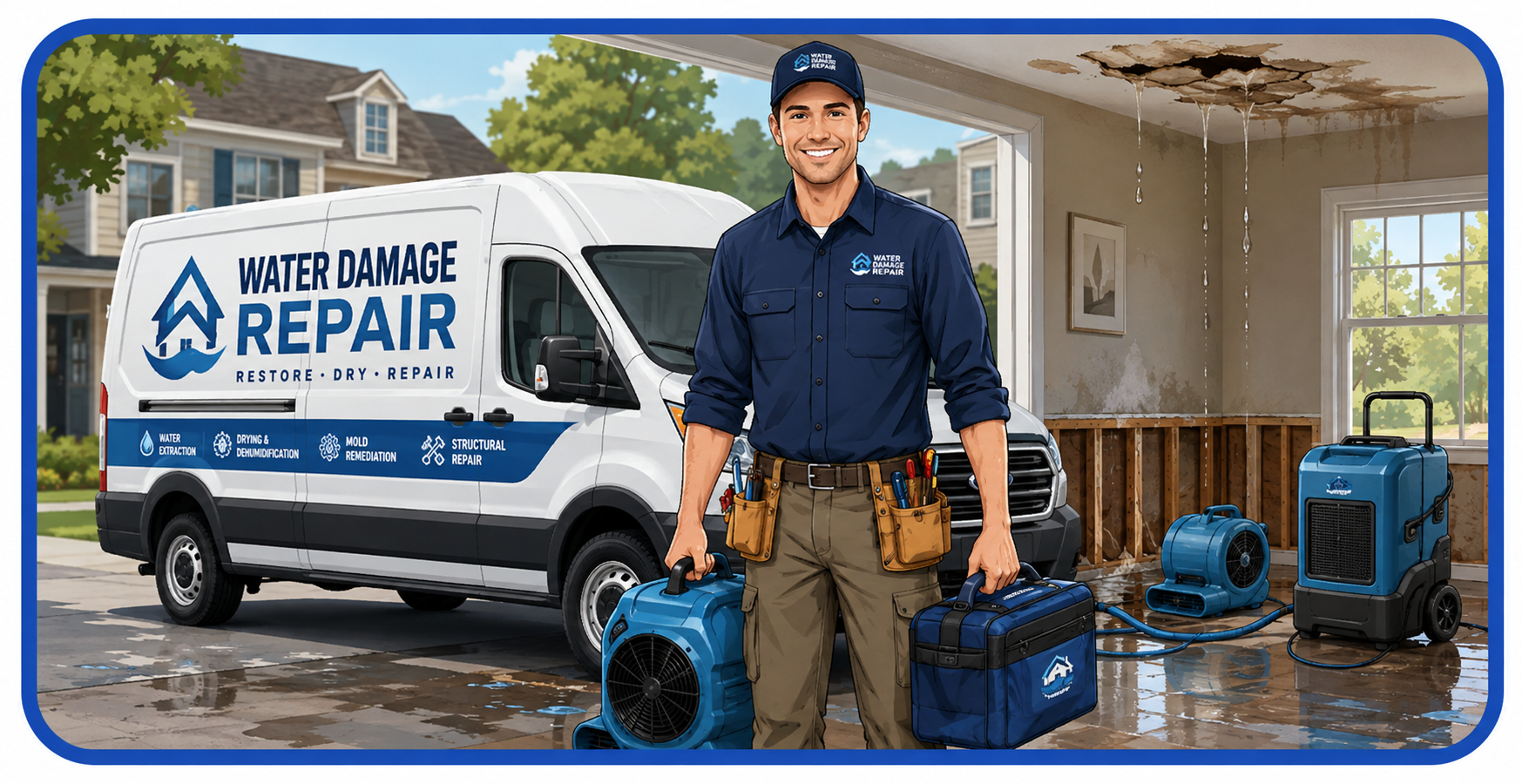
The storm tore a section of shingles off the roof, and wind-driven rain poured into the attic for hours. Now the insulation is soaked, the bedroom ceiling has a brown stain spreading across it, and more rain is in the forecast. Storm water damage comes from above, and the first job is keeping more of it from getting in.
Free referral to independent, licensed and insured local pros. Zip codes served include 75561.

We are a referral line, not a contractor. Calls are routed to independent local pros around Hooks who handle the full storm sequence, from covering the roof to repairing ceilings.
The first priority is keeping more rain out. Contractors tarp damaged roofs and board up broken windows or doors before interior drying begins.
Contractors in the network already work around Hooks, which matters when you need follow-up visits and warranty service after the trucks from out of town leave.
Confirm license and insurance before signing anything, especially after a big storm.
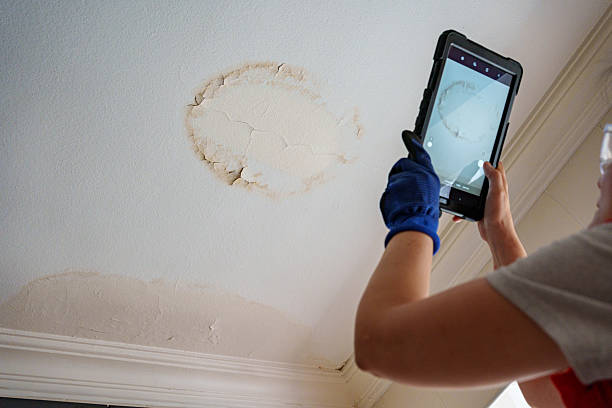
Detailed photos and moisture logs give your adjuster what they need to process the storm claim.

Storm restoration starts outside and works inward. Stop the leaks first, then handle the attic, ceilings, and walls.

Damaged roof areas are covered with secured tarps to stop leaks until the roof can be repaired.
Openings from broken glass or tree damage are boarded up to protect the home.
Soaked blown-in or batt insulation is removed, roof decking and rafters are dried, and the attic is checked for mold before new insulation goes in.
Water-damaged ceilings and walls are removed, dried, rebuilt, and painted.
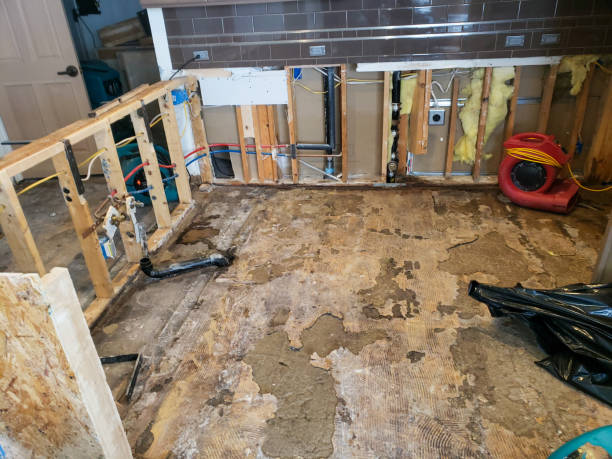
Air movers and dehumidifiers dry ceilings, walls, and floors below the leak until moisture readings confirm the structure is dry.
Tell dispatch whether rain is still getting in and where the damage is.
A local contractor calls with an arrival estimate. After regional storms, demand is high, and they will be honest about timing.
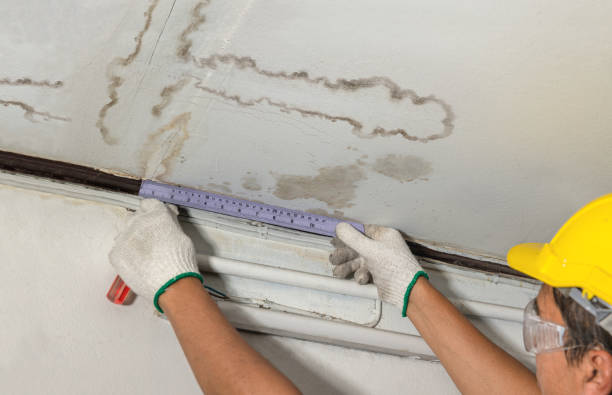
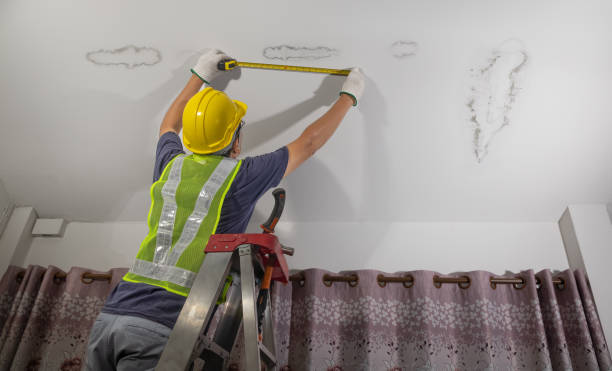
The pro inspects the roof line, attic, and interior, takes moisture readings, and gives you a written estimate before work begins.
The building is tarped or boarded, the interior is dried, and ceilings, walls, and insulation are repaired.
Stop the leak first, then dry it out.
Lost shingles in a windstorm and the attic flooded. Tarped by noon, insulation replaced, ceiling repaired.
Natalie G.Wind damage, attic and ceilingA tree limb went through the dining room window. They boarded it up that night and dried out the floor before it warped.
Victor A.Tree limb, broken windowPlenty of storm chasers showed up. This pro was local and showed his license and insurance right away.
Brenda K.Hail and wind stormThe photos they took of the roof and attic made my storm claim simple. The adjuster approved it in one visit.
Luis F.Storm insurance claim

Climbing a wet, damaged roof is dangerous. A professional tarp is safer and more likely to hold. Many policies cover reasonable emergency tarping costs.
Damage from wind and rain entering through a storm-damaged roof or window is often covered. Rising floodwater from outside usually is not. Check your policy with your agent.
Ask for a local address, proof of license and insurance, and a written estimate. Be cautious with anyone demanding large upfront payments or pushing you to sign immediately.
Usually not. Wet insulation loses effectiveness and can hold moisture against the roof deck.
Act within a day or two. Mold grows quickly, and the next rain adds more damage.
No. We connect you with independent local pros. Verify their license and insurance before work starts.

Calls from Hooks and zip codes such as 75561 are routed to local storm damage pros.
See nearby cities below. You will get an honest timeline after large regional storms.